In search of Philosophers Stone - Hennig Brand
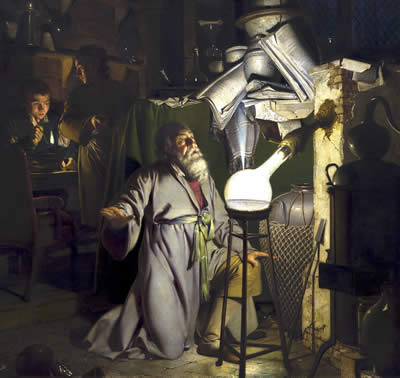
Like other alchemists of the time, Hennig Brand (16th Century) searched for the "philosopher's stone", a substance which supposedly transformed base metals (like lead) into gold.
Around 1669 he heated residues from boiled-down Urine on his furnace until the retort was red hot, where all of a sudden glowing fumes filled it and liquid dripped out, bursting into flames. He could catch the liquid in a jar and cover it, where it solidified and continued to give off a pale-green glow. What he collected was phosphorus, which he named from the Greek word for "light-bearing" or "light-bearer."He used about 5,500 litres of urine to produce just 120 grams of phosphorus.
The philosophers' stone
The philosophers' stone was the central symbol of the mystical terminology of alchemy, symbolizing perfection at its finest, enlightenment, and heavenly bliss.