Last words are for fools who haven't said enough - Karl Marx
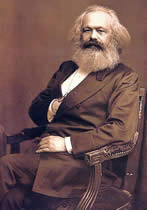
Karl Marx's theories about society, economics and politics—collectively understood as Marxism—hold that human societies develop through class struggle: a conflict between ruling classes that control the means of production and working classes that work on these means by selling their labour for wages. Marx argued that capitalism facilitated social relations and ideology through commodification, inequality, and the exploitation of labour. According to Marx, states are run in the interests of the ruling class but are nonetheless represented as being in favor of the common interest of all. He predicted that, like previous socioeconomic systems, capitalism produced internal tensions which would lead to its self-destruction and replacement by a new system: socialism.
Marx died in 1883, at the age of sixty-five. When a servant asked him whether he had any last words, he roared: "Go on, get out! Last words are for fools who haven't said enough."
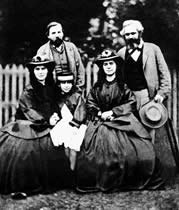
Several of his closest friends spoke at his funeral, including Friedrich Engels. Engels' speech included the passage:
“On the 14th of March, at a quarter to three in the afternoon, the greatest living thinker ceased to think. He had been left alone for scarcely two minutes, and when we came back we found him in his armchair, peacefully gone to sleep—but forever.”